
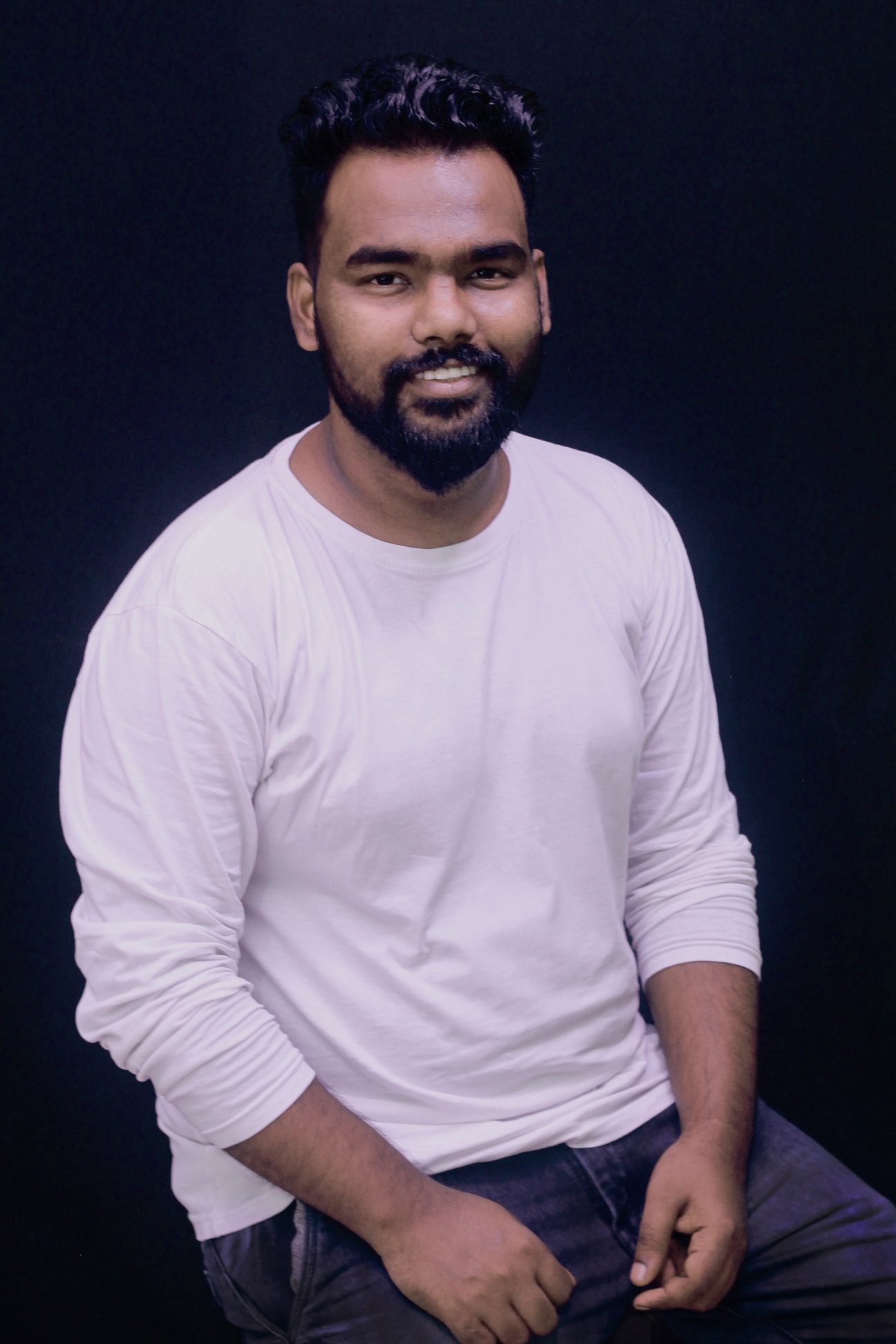
In 2015, I received a project brief from a media company called Spirit Media, based in the United States. They needed an audiobook edited — a full-length non-fiction title for publication on Audible. I was 25 years old, sitting in Sambalpur, Odisha, with a decent microphone, Adobe Audition, and no idea what ACX standards were.
I submitted the first file three days later. They sent it back with 47 revision notes. I spent the next week learning what broadcast audio quality actually meant — not just "no background noise" but specific RMS levels, acceptable peaks, room tone consistency, and a dozen other technical requirements I had never encountered in any local project.
That first revision cycle was humbling. It was also the most valuable professional education I have ever received. What followed was a 9-year working relationship, 60+ audiobooks published on Audible, 200+ video assets produced for YouTube, and a standard of work that completely separated everything I do from what most media freelancers in Odisha deliver.
Lesson 1 — "Good Enough" is the Most Expensive Standard You Can Have
In most local media work, "good enough" is the accepted standard. The client says yes, the project is complete, everyone moves on. I operated the same way until Spirit Media showed me what happens when you deliver "good enough" to a client with international standards: they find someone else.
The difference between "good enough" audio and broadcast-quality audio is something most clients cannot articulate — but every listener feels. Background hiss that you've stopped noticing, inconsistent volume levels across chapters, mouth clicks that you decided weren't worth removing. These things are invisible to an untrained ear in a local context. They are immediately disqualifying in a professional international context.
After my first Spirit Media revision cycle, I adopted a simple rule: before I submit any deliverable, I ask "What would have to be wrong with this for a demanding international client to send it back?" Then I find those things and fix them before submission. This habit transformed my rejection rate from 60% on first submission to under 5% — and built the trust that kept Spirit Media coming back for nine years.
Lesson 2 — Deadlines are Non-Negotiable in Professional Media
In Indian freelance culture, deadlines are often treated as starting points for negotiation. "I'll have it to you by Friday" frequently means Saturday or Sunday — and the client accepts this because it is the norm. Spirit Media operated on a publishing schedule tied to marketing campaigns, distribution windows, and platform release dates. A missed deadline did not mean an inconvenienced client. It meant a broken production pipeline with financial consequences.
Working within this system taught me that timeline commitment is a competitive advantage, not a burden. When I tell a client in Sambalpur that I will deliver a website in 14 days, I deliver it in 14 days. This is so rare in the local market that it alone generates referrals. Clients talk about it. "He actually delivered on time" has become part of how vmediaproduction.com is described by word of mouth.
Lesson 3 — What Odisha's Creative Industry Can Learn
The gap between local media quality and international media quality is not a talent gap. I have met extraordinarily talented photographers, video editors, and designers in Odisha who are producing work that is technically as good as anything I encountered working with American clients. The gap is a standards gap — and standards are entirely learnable.
Here is what applying international standards to local work looks like in practice:
- Delivering a first draft that is 90% of the final rather than a rough sketch that needs multiple revision rounds
- Writing clear project briefs before starting, not after the client complains about the direction
- Providing progress updates without being asked — weekly check-ins that tell the client where the project stands
- Presenting work professionally — a shared Google Drive folder with clearly named files, not a WhatsApp image dump
- Following up after delivery to check if the client is satisfied and if there is anything additional they need
These are not complicated. They do not require expensive equipment or formal education. They require the decision to hold yourself to a higher standard than the market around you. That decision, more than any skill or tool, is what built vmediaproduction.com.
How This Shaped vmediaproduction.com
When I founded vmediaproduction.com in 2024, I had one clear goal: to bring the standards I had learned working with American clients to businesses in Odisha and beyond who deserved world-class digital work but were being underserved by the local market.
Every project I take on — whether it's a ₹15,000 website for a local NGO or a ₹2 lakh AI automation build for a growing startup — receives the same process, the same attention, and the same revision commitment that Spirit Media received in Silicon Valley. Not because I'm charging Silicon Valley prices (I'm not), but because that's the only way I know how to work.
If you're a business owner in Odisha who has been disappointed by local digital work that didn't meet your expectations — I understand exactly why it happened, and I'd like to show you what it looks like when it's done right.